
Nobody Understood Why I Wanted to Leave
Nobody understood. Why would they? From the outside I had the thing everyone claims to want — a career with meaning bolted onto it, a cause that mattered, visible proof I wasn't wasting my one life. When I started talking about leaving, people looked at me like I'd told them I was giving up oxygen.
There are photographs of me from those years standing next to people you'd recognise. Smiling. Arm around someone famous, raising money and awareness for homeless people in Scotland. Genuinely good work. Work I'd given a decade of my life to.
And I wanted out. Out. Out of the building, out of the sector, out of the entire shape my life had taken by then.
What I couldn't explain at the time, and it's taken years and most of my psychotherapy training to articulate it, is that I hadn't fallen out of love with the cause. I'd just stopped being anywhere near it.
In the beginning I was with people. Actual people. Sitting with someone on a bad day, learning their name, watching something shift. That was the whole thing. Then we grew, the way organisations do, the way everyone congratulates you for, and my days filled up with what comes with growing. Board papers. Budget lines. KPIs. People to manage and manage around. Politics - office politics, which I hate, and boardroom politics, which I hate considerably more. Meetings. Meetings about meetings. Meetings about the meetings we'd need to have for the meetings.
And the constant low-level surveillance of yourself. Never saying the wrong thing. Never being the story. Trying not to let a bad day be visible, because you're the face of something now and that something is bigger than you.
So of course I felt disconnected from purpose. I was three floors and eleven layers of process away from the only part that had ever fed me.
The thing I lost first was my ability to switch off. Then my energy. Then my relationships, in the way you don't notice until someone stops inviting you (because you never show up anyway). Then any real sense that my time belonged to me. I want to be careful here, because I'm not saying the hustle doesn't work - it does work, it built something that helps thousands of people, and it probably does get easier after the brutal early years. I'm saying I found it empty. Those are different complaints and I've stopped conflating them.
It was years later, when I found the Enneagram and eventually understood myself as a Type 2, that the rest of it made sense. The insatiable pull to be useful. The reflex to give people what they need before I've checked what I need and been clear and fair to others by stating it plainly. The complete inability to say: I don’t want this. I hadn't been trapped by the job. I'd been trapped by a part of me that had learned, very young, that being indispensable was how you stay loved. The job was just the place that part found its perfect expression and found it’s own downfall.
The bind nobody warns you about
So I became a purpose coach. I went properly deep into what it actually means to feel fulfilled by a life, not just a job — because there are plenty of people who’s purpose isn't career-shaped at all, and that's every bit as worth excavating.
And then I hit the wall that anyone honest about this work hits eventually.
The kind of jobs people would genuinely love, the thing that lights them up when they let themselves talk about it, very often doesn't pay them enough to live the life they need. Not the life they want. Need. And when someone is sitting in front of you weighing financial security for their family against personal congruence and meaning, they choose security. Nearly every time.
I don't blame them for a second. I would too. Anyone telling you otherwise is selling you something, and I'd check what.
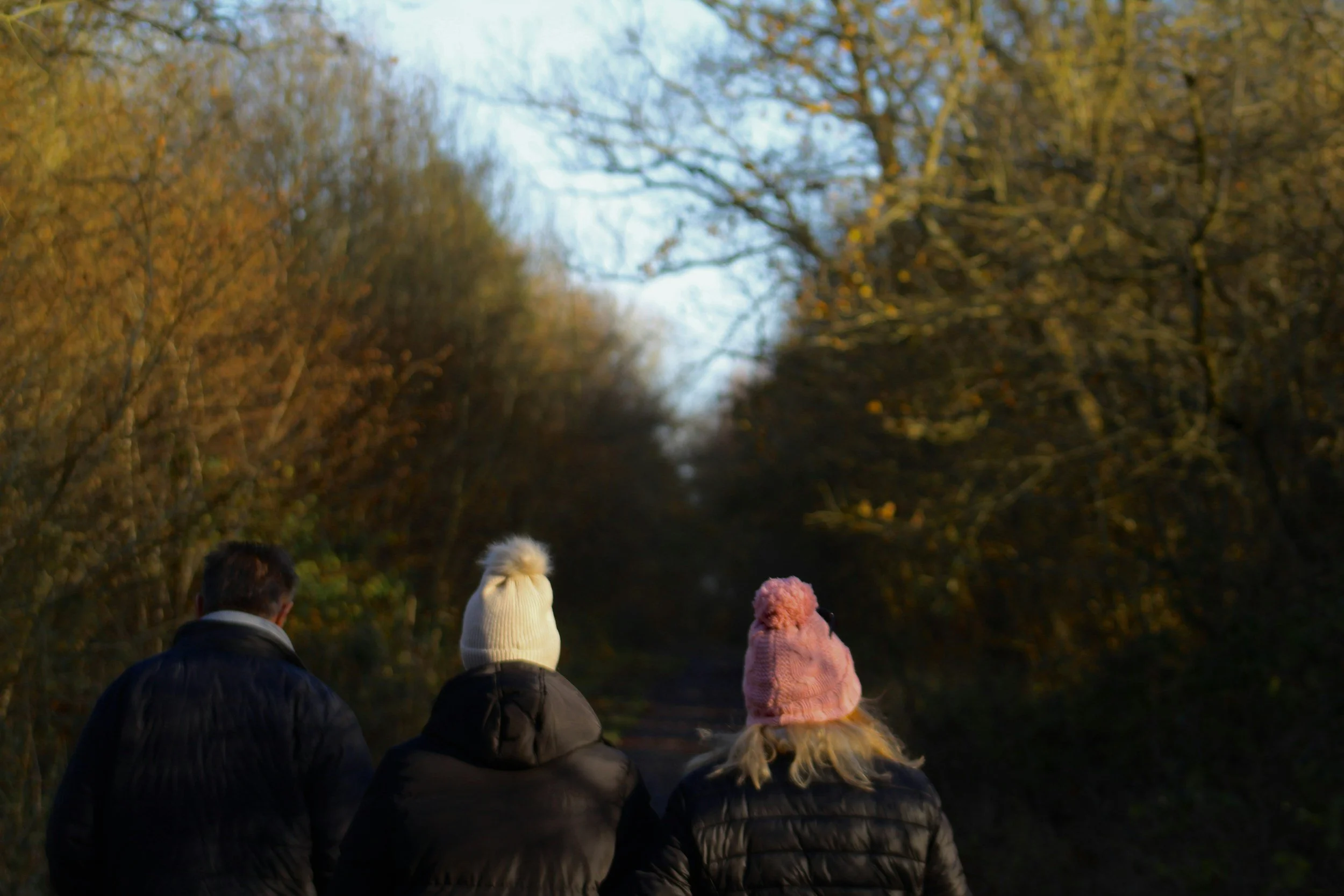
Then lockdown happened, and something extraordinary went on in this country. Millions of people had their commute deleted, their office deleted, their whole scaffolding deleted, and got handed back to their homes, their families, their intimate bubbles of friends, their gardens and their local patches of green spaces for longer than a snatched hour at a time. It was the largest accidental philosophical retreat I'll see in my lifetime.
My business boomed. Everyone was suddenly asking the same three questions. If I have to earn money - do I have to earn that much? What have I been spending money on that was only ever distracting me from what actually matters? And what would I actually do with my life if I stopped performing it?
Some of my clients made enormous changes. Others went back and finally pushed for the promotion they'd deserved for three years, because if they were returning to the office they weren't handing over the extra for free anymore. (The papers called it quiet quitting. I called it the first honest negotiation some of these people had ever had.)
But the thing that changed my practice permanently was quieter than any of that. Underneath the career questions, what people actually seemed to be reaching for had nothing to do with optimising anything. They wanted to be still. They wanted to know what was happening inside them. They wanted to stop performing a version of themselves for eight hours a day and go home exhausted from the effort of that mask they wore for professionalism. And most of all they wanted to stop being at war with the parts of themselves they were ashamed of.
Not scale. Not 10X. Not growth for the sake of growth, which is the logic of a tumour and somehow also the logic of most business advice.
What actually moved
I started drifting towards therapeutic work without deciding to, and I'm now halfway through a psychotherapy qualification and cannot wait to be a bonafide, real-life psychotherapist as well as a purpose or life coach.
What I've watched happen, over and over, is that the biggest changes in people's outer lives arrive after something has healed in their inner one. Not before. The job change, the honest conversation, the boundary that had been impossible for years — those land almost as afterthoughts once the thing underneath has been met properly.
It happened to me too, and it took a form I never predicted. I actually just kind of stopped wanting more.
That's it. That's the whole change. I got clearer on my values (not an-organisation-I-started’s values), and I’ll be honest that’s a forever job not something you decide one day - I’m constantly reminded by my loved ones who inspire me most with their integrity that values are something we’re constantly tested on. I found more peace. And the wanting just... loosened. I began turning down client work that didn't belong in a healing practice, which meant turning down some big corporate money. I braced for the financial drop that this should inevitably cause. I sat my husband down and warned him we'd need to make cutbacks.
But what happened instead is that where the whale-sized clients swam off - small, beautiful, colourful fish turned up in numbers I didn't expect. So far I haven't felt the financial hit - and I'm touching wood as I type here, because some superstitious part of me is convinced somebody's coming to take this away, how dare I have work that I love that also gives me my personal time.
I want to name the privilege in that plainly, because I've read too many versions of this story where someone quietly leaves it out. I'm married to someone who loves his work, is happy to be the breadwinner, and wants me doing work I love too. That's a floor under me that most people don't have. It made the leap from Social Bite to coaching (and then again from business coaching to therapeutic coaching for individuals) just about survivable even if it didn’t work out the way I planned. So this isn’t universal advice, and I won't pretend it is. But it’s still something I thought was impossible before I took the leap of faith. We had to crunch the numbers and be willing to be a bit broke for a while, to not go on holidays, to eat a lot of pasta and stop buying the nicer version of stuff. In the UK, you can actually live on very little if you try hard enough. But in the end, I was lucky and I worked hard - both of those things happened. And I landed on my feet financially, eventually. Not something many full time coaches achieve.
Where I've landed
Here's the conviction I've been circling for six years, and it cuts both ways.
Therapy needs to know when to stop being neutral and compassionate.
Let me be specific, because this is the bit I feel most strongly about. Years ago I sat in a therapist's office, in a genuinely vulnerable stretch of my life, and asked a question I badly needed help with. How much is too much? Weed, alcohol, all of it. Where is the line between winding down and leaning on something?
It isn't a daft question, either, because the official answers are incoherent. We're told no cannabis whatsoever, largely because it's illegal here, while it's legal across large parts of the western world in cultures near enough identical to ours. We're told fourteen units of alcohol a week, and I'd invite you to look around my generation and older to count the people actually sticking to that. Meanwhile the most-cited physical and medical harm ranking we have for drugs puts alcohol above heroin once you count the damage done to everyone else - the drink driving, etc. So where's the solid ground? How is anyone meant to tell a dependency from a Friday?
What came back was: "That's up to you. What do you think? How do you feel about it?"
We spent that hour excavating my psychological disposition towards asking the question and never once went near guidance on that important question. I left knowing rather more about why I'd asked and no closer whatsoever to knowing what to do on a Saturday night and whether I should feel more guilt or shame if I had a weed edible or drank with my friends, who didn’t seem worried about it at all.
And I understand the reasoning behind it. I'm training in this now, so I know exactly why that boundary exists, and some of those boundaries are non-negotiable - they protect the client from the therapist's own unexamined stuff, and a room where someone hands you their opinions about how to live is not therapy, it's an audience with a guru. I'm not arguing for that. I'll never argue for that. I pride myself on asking questions and helping my clients find their own conviction most of the time.
But there's a second cost to strict neutrality in the therapy room that gets talked about far less in training, but much more by seasoned professionals such as Phil Stutz (subject of the Netflix documentary about his ground breaking approach, ‘Stutz’) and many more: You can sit with someone for years and never really know them. There's a particular loneliness in being deeply known by somebody who stays a stranger to you. Some of that distance is doing a job. Not all of it is. Stutz says “If you have a client every week for 15 years and you’ve never shared a meal with them, where’s your humanity?”. You can maintain personal and important boundaries without disappearing, without hiding behind being “professional”. I feel like… if you really believe in helping people heal, you have to be willing to show up too… without ever making it about you, but by bringing your ability to guide and challenge when needed most.
And given what we now understand about the nervous system, about how change actually happens in the brain, about what genuinely builds a psychologically safe space and the conditions for healing trauma - I think we can do considerably better than staying rigidly person-centred and reflecting everything back. We can bring in a perspective. A pep talk. A challenge. A gentle nudge in a positive direction - when they are ready. And you can ask for consent for that instead of firing off on one when you think they are. More often than not, clients are receptive to this.
And coaching needs to know how to heal. All the challenge and accountability and goal-setting in the world - which is what I was originally trained to do - will not shift someone whose real obstacle is a wound they've never been able to look at. You can fire a person at the wrong goal beautifully. And if it's the wrong goal, and it usually is, you've just made them efficient at the wrong life. I know because it's been done to me and I've done it to others.
I realise that the blend of the two is what's actually getting results for people now, in a way straight coaching stopped doing for me some time ago.
Which means my work is not for everyone, and I've made peace with that. I have no interest in your KPIs and I'm not going to help you 10X anything. If your fulfilment genuinely runs through building something - and for some people it truly does, it's creative and alive and a joy to work on together - then let's go! But I'll also say this out loud: fewer than four in ten UK businesses started in 2019 were still trading five years later. If yours is one that doesn't make it, I'll be here for that part too - the part where you need to lick your wounds and put the pieces back and build work again that honours what actually matters to you and pays your debts off.
I'm just not going to push you towards £200k a year. Not anymore. Not in an economy where the further up you look, the wider the gap gets between what a few people are quietly extracting and what everybody else is left scrapping over. It's a strange time to be a coach. It's a stranger time to pretend the answer is more.
Why this, now
We are more siloed than we were, in an economy that can't recover from lockdown or from Brexit, with narcissists running the world and enriching their personal allies.
And I'd point out the thing that seems obvious from where I sit, which is that not one of those people has ever turned round and looked at themselves. That's practically the job description. You don't arrive at that level of grasping - the hoarding, the blind greed, the need to be adored by a stadium even when you’re wrong - if you've ever sat still long enough to meet what's driving it. Whatever got installed in them early has never been examined, and it is currently setting policy for the rest of us. We are being governed by unattended wounds. Enormous ones, with press offices.
Now look at who's arriving into that. Mental health difficulties among young adults in this country have doubled in a decade. Gen Z are turning up to the table anxious, exhausted, and watched - the first generation to grow up with every clumsy draft of themselves preserved on a server somewhere if they’re brave enough to ever try something - and they're being told to be resilient by people who have never been resilient about anything except their own comfort. No wonder they’re struggling to leave the house or speak up in class!
You cannot hand somebody resilience in a workshop. God knows I've been paid to try. What I've watched instead, over and over, is that young people don't absorb what we tell them, they absorb what our nervous system is doing while we tell them. Like children growing up in a house with parents that fight, but tell them everything’s ok. They know. They clock the tightness in your jaw when you say you're fine. They learn which of their feelings are safe to have by noticing which ones made you flinch. Whatever we haven't looked at gets handed down anyway, in full, without our permission and usually without our noticing.
Which brings me to the two ways people are coping with all this, and I see both of them every single week. Some go numb through immediate gratification - scroll it away, make it a joke for anyone to be vulnerable, drink it away, stay busy enough that nothing ever has to be felt all the way through. Others go hard - armoured, certain, contemptuous, permanently furious at some category of person. Both work. Both are cheap and available and neither requires you to feel anything difficult. And both take you straight out of the room, which is the problem, because the room is where anything gets built and where life is actually happening.
So this is the bit I actually believe, underneath all of it. Getting still, going inwards, turning to face the thing you've been managing around for twenty years - that isn't self-indulgence while the world burns. It’s actually fucking hard. It's how you stay able to look at the fire and deal with what’s going to come after. It's what keeps your judgement working at a time when you need it most. It's how you stay useful, and how you stay in the room for the rebuild of society that's inevitably coming whether any of us feel ready for it or not.
I didn't have a word of this language ten years ago. All I had was a certainty that something was badly wrong and no way to make that make sense to anybody, myself very much included. That's what nobody understood, and honestly, fair enough - I couldn't have explained it either. It's what I do for a living now. Sitting with people at exactly that stage, before they've got the words, when all they have is the sense that the life they carefully built doesn't fit and not knowing what to do with all they’ve got. But trust me - they’ve got everything they need. We have all the resources we need inside to heal. Sometimes we just need a little help. That’s where therapy or coaching can help - or for me, an approach that leans towards therapy, but blends both.
We fix our own stuff and we model ourselves as examples, whether we intend to or not.
If any of that landed somewhere in your chest, that's usually worth following. It doesn't have to be with me. But go and find someone. My door's open, and there's no hurry in this room.